
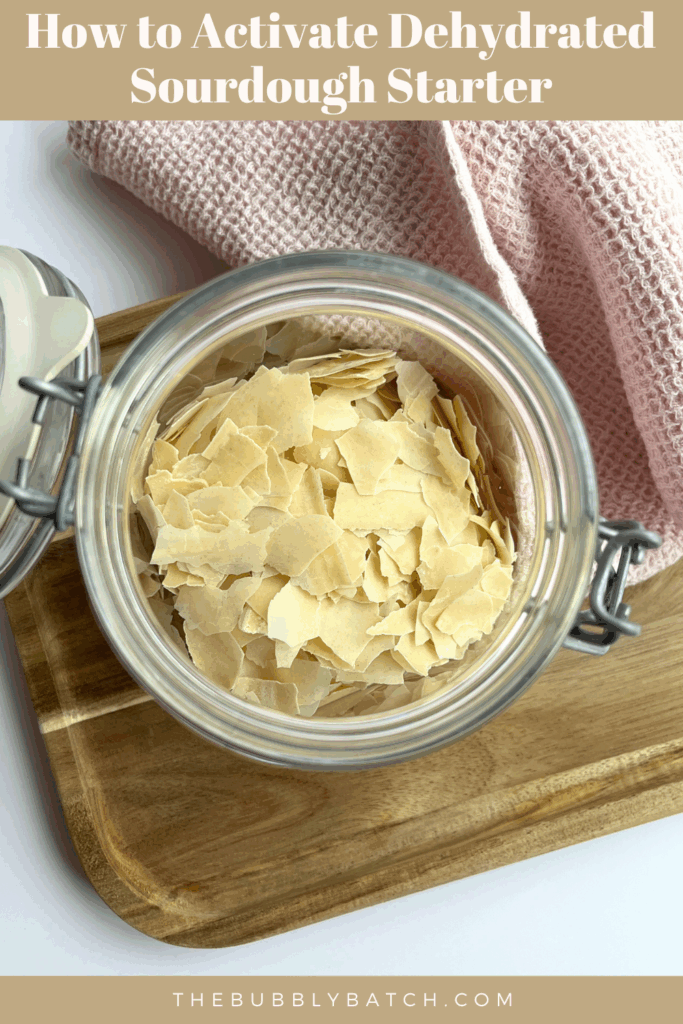
How to Activate Dehydrated Sourdough Starter
If you’ve got a packet of dried sourdough starter—whether you bought it, were gifted it, or saved it as a backup—reactivating it is actually really simple. All you’re doing is feeding it flour and water until it wakes up and starts rising again.
In this guide I’ll walk you through the exact feeding schedule I use to bring dehydrated sourdough starter back to life in less than 48 hours. I’ll also include tools you may need, troubleshooting tips, FAQs, and sourdough recipes you can make once your starter is active again.
THIS POST CONTAINS AFFILIATE LINKS, WHICH MEANS I MAKE A SMALL COMMISSION AT NO EXTRA COST TO YOU. SEE MY FULL AFFILIATE LINK DISCLOSURE HERE.
What Is Dehydrated Sourdough Starter?
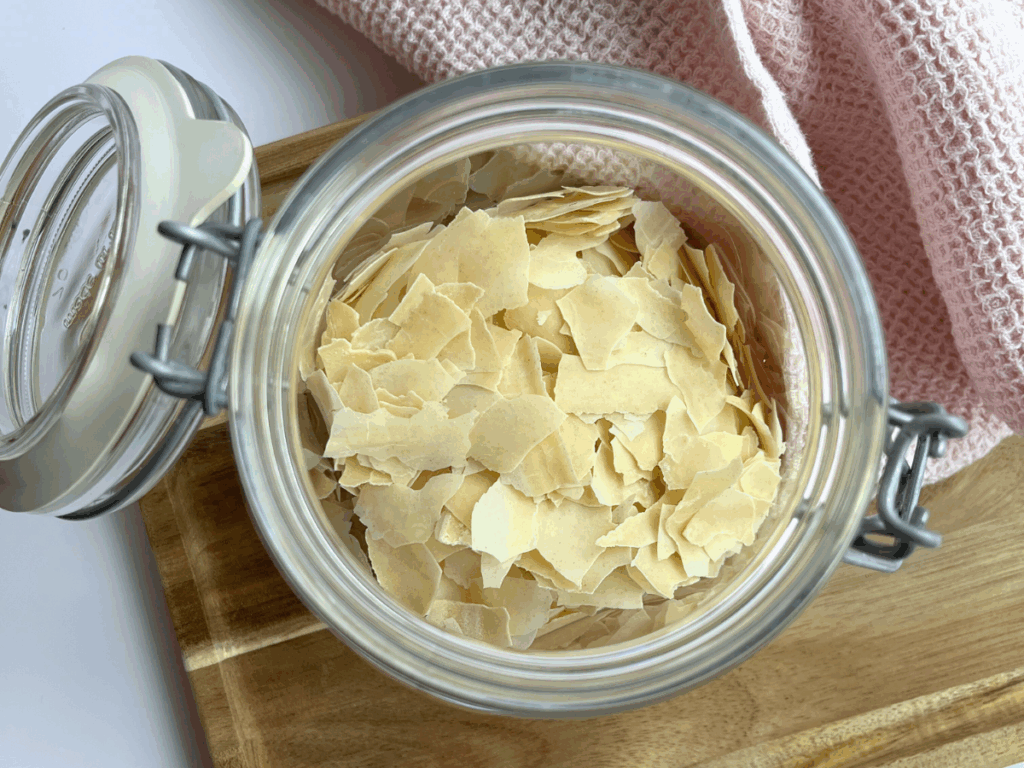
Dehydrated sourdough starter is simply fully active sourdough starter that’s been dehydrated and broken into flakes. Drying it puts the yeast and bacteria “to sleep,” which makes it perfect for things like long-term storage, sharing with friends, mailing to customers, emergency backup and traveling.
Once you rehydrate it with flour and water, it wakes right back up and works exactly like a regular sourdough starter.
Things You’ll Need
- A glass jar with a loose-fitting lid (wide-mouth makes stirring easier)
- A digital kitchen scale
- Unbleached all-purpose flour
- Room-temperature water, I use spring water, but filtered water is good too.
- Spoon or rubber spatula
- Rubber band (optional, for tracking rise)
How to Activate Dehydrated Sourdough Starter
This is the exact feeding schedule I use to revive dried starter quickly and consistently.
Step 1: First Feed
Add the following to your jar:
- 15 g dried sourdough starter
- 15 g all-purpose flour
- 30 g water
Stir well and place the lid on loosely.
Let this sit at room temperature until you see signs of life—tiny bubbles, rising, and a lighter texture.
Step 2: Second Feed
Once the mixture has doubled in size and looks bubbly, it’s ready for its next feeding.
Add to a clean jar:
- 30 g of the starter mixture
- 30 g water
- 30 g all-purpose flour
Stir again and place the lid on loosely.
Step 3: Repeat Feedings as Needed
When your starter doubles or triples again, repeat the same 1:1:1 feeding (starter, flour, water).
After a couple of feedings, your starter should be ready to bake with!
If you want more information on long-term care, storing your starter, or feeding schedules, I have a full guide here:
How to Start a Sourdough Starter
How to Know When Your Starter Is Fully Revived
Your starter is ready to bake with once it:
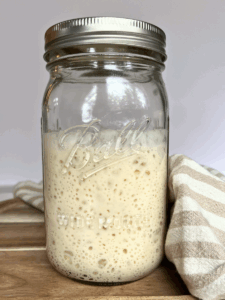
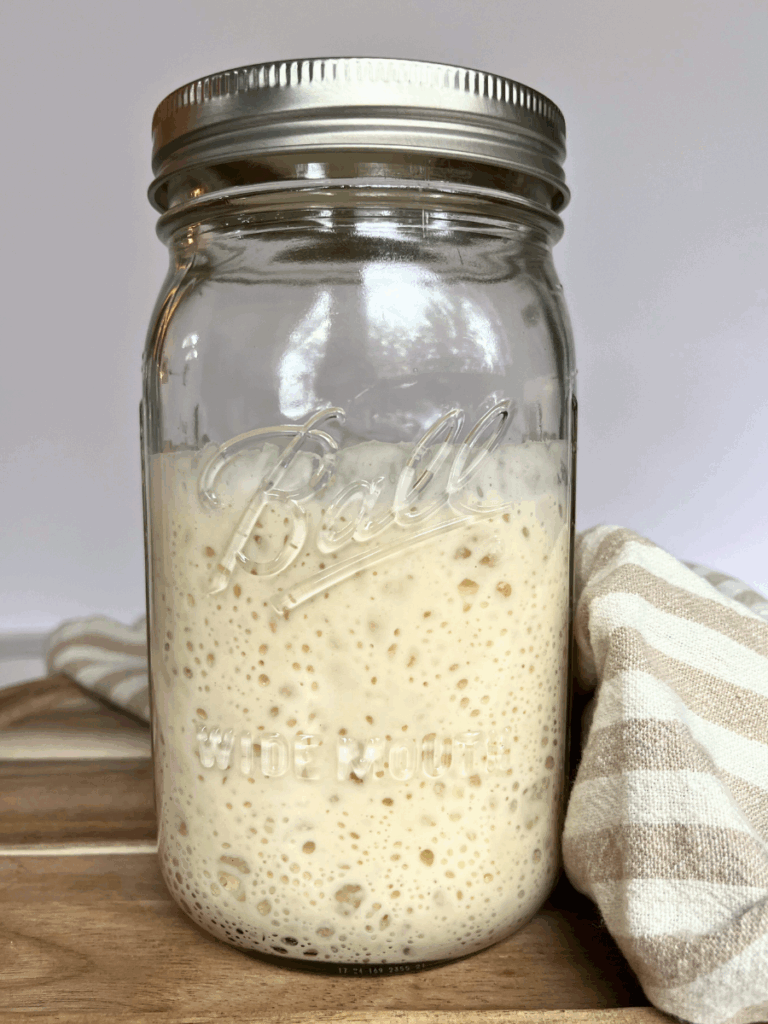
- Doubles in size after a feeding
- Has a light, airy texture (big bubbles)
- Smells slightly tangy and yeasty
- Has domed or peaked at the top
- Passes the float test (optional)
FAQs
How long does it take to reactivate dried sourdough starter?
Usually 24–48 hours, depending on your kitchen temperature.
Do I have to use all-purpose flour?
You don’t have to, but it’s the most reliable flour to use while your starter is waking up. You can switch flours later. I like this organic unbleached all-purpose flour, it is always reliable and produces great results!
Can I bake with it right away?
Wait until it doubles in 4–6 hours (depending on kitchen temp) after a feeding. That’s when it’s strong enough to use in recipes.
Do I need a scale?
Yes—sourdough works best with precise measurements. Something like THIS will work just fine!
Sourdough Recipes to Try Once Your Starter Is Active




You’re Ready to Bake
Once your dehydrated starter is bubbly and rising well, you’re officially back in business. Keep feeding it, store it properly, and start exploring new sourdough recipes. If you have any questions along the way, feel free to leave a comment—I’m always happy to help.



This was very helpful. Thank you.
I’m so happy you found it helpful!